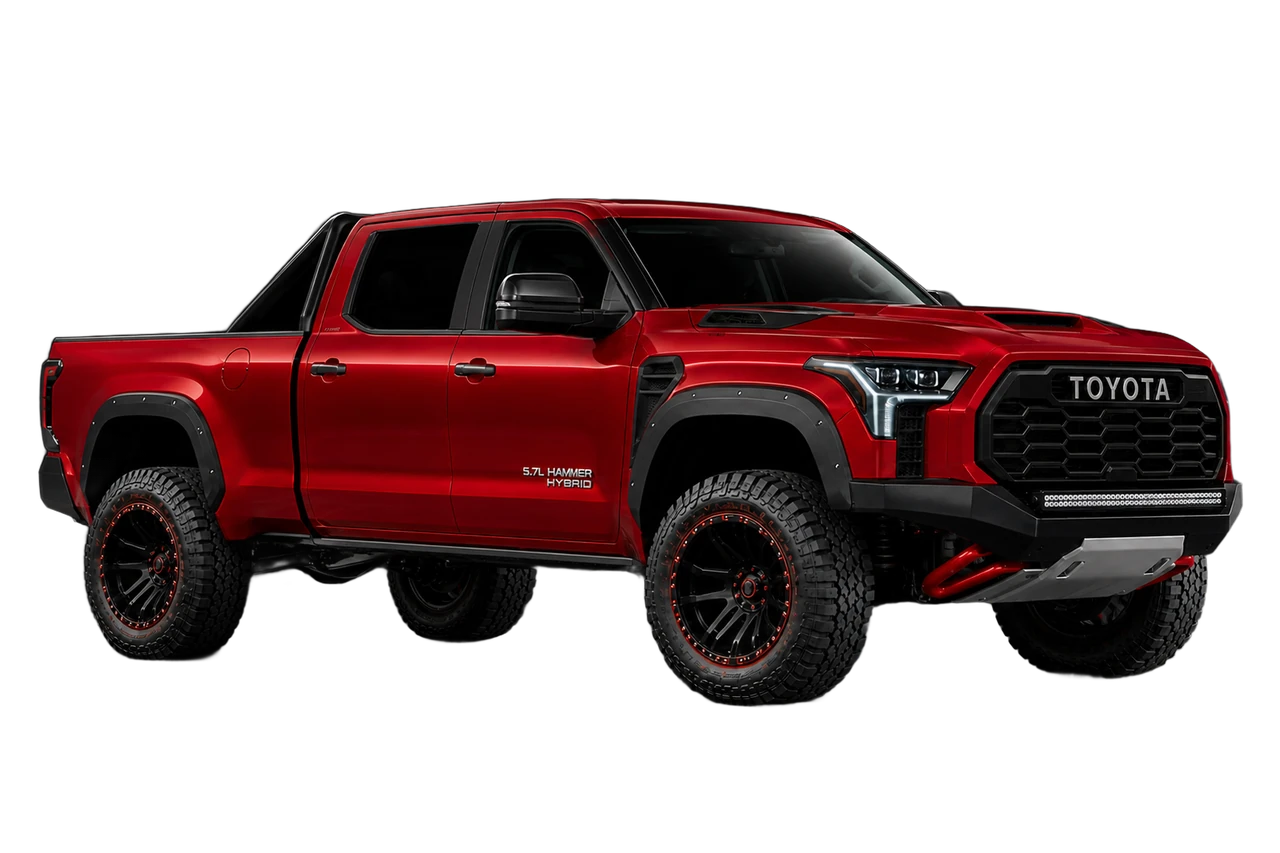
2028 Tundra HAMMER — concept The V8 is back.

Front three-quarter5.7 liters. Supercharged.

Hybrid-assisted. 768 horsepower. 806 lb-ft.

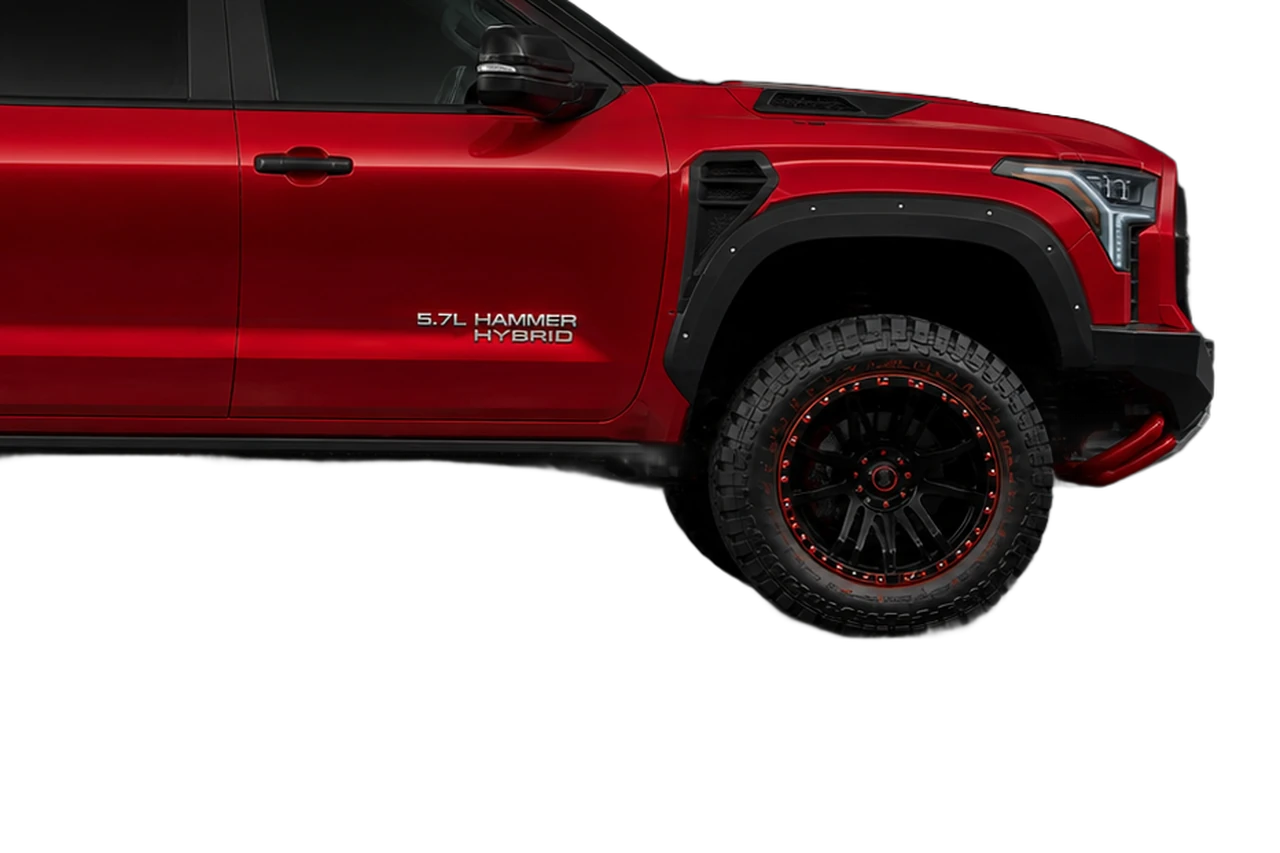
Driver-side profileThirty-seven inches of tire.

Beadlock-capable forged wheels. 13.4 inches of clearance.

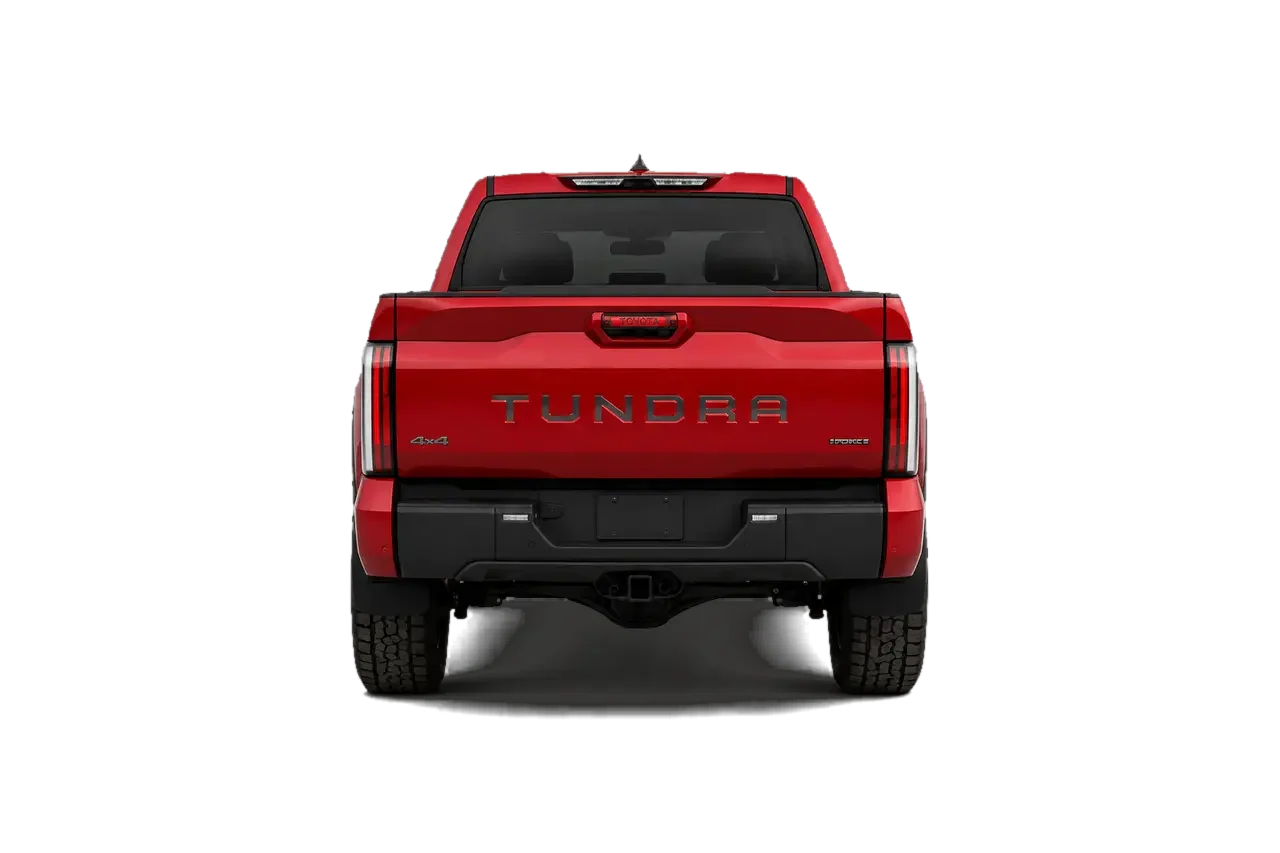
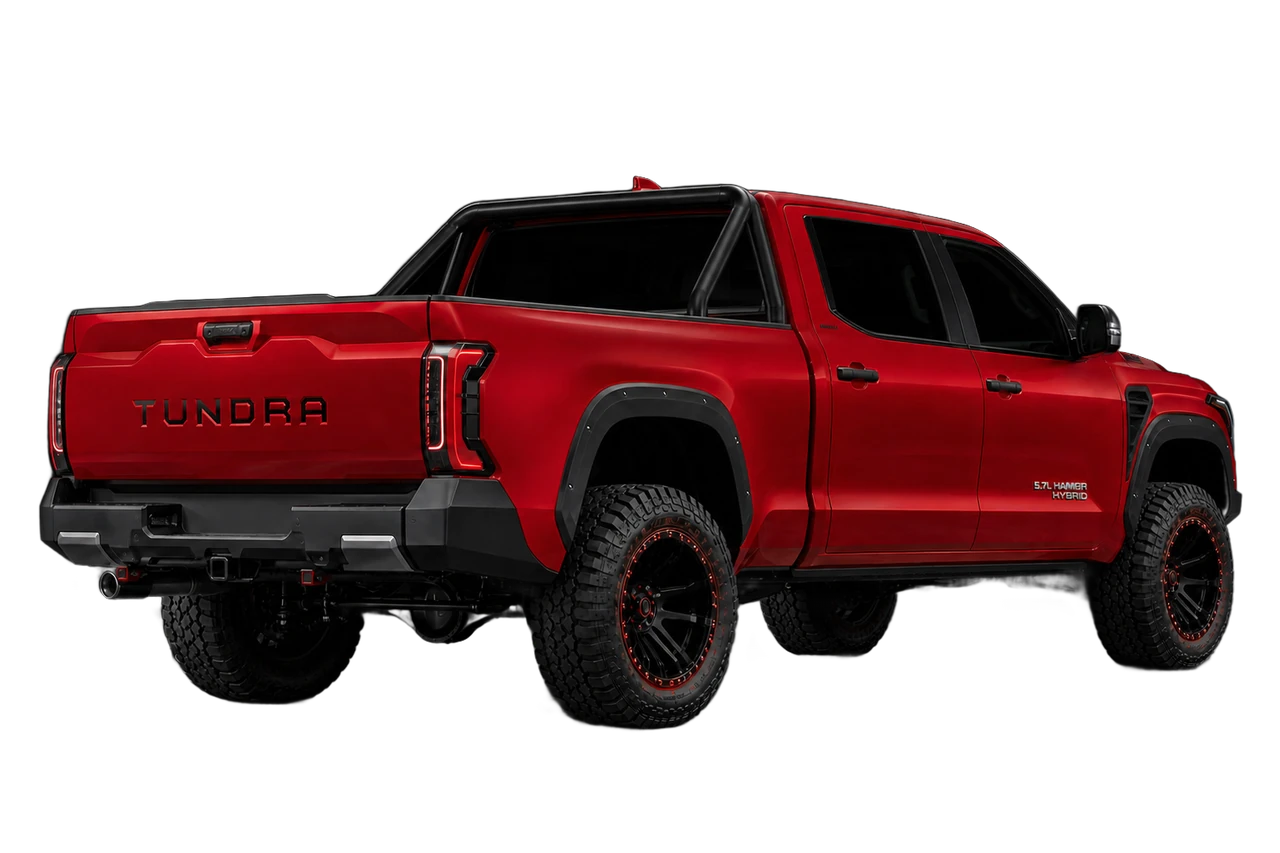
Rear elevation15.4 inches of rear travel.

Internal-bypass dampers. Remote reservoirs. Hydraulic bump stops.

Passenger sideThree inches wider. On purpose.

Widened track, high-clearance fenders, lockers at both ends.

Red 2028 Tundra HAMMER pickup truck, front three-quarter view, in a black studio.

The announcement

They took the V8 away.
We took it back.

In 2021 the 5.7 went quiet. Not because anyone stopped wanting it — because a fuel-economy table said so. Two decades of owners have been asking for it back ever since.

It is back. Same 5.7 liters, same iron-willed character, now supercharged and carrying a hybrid motor between the engine and the ten-speed. 768 horsepower. 806 lb-ft, most of it available before the tachometer wakes up.

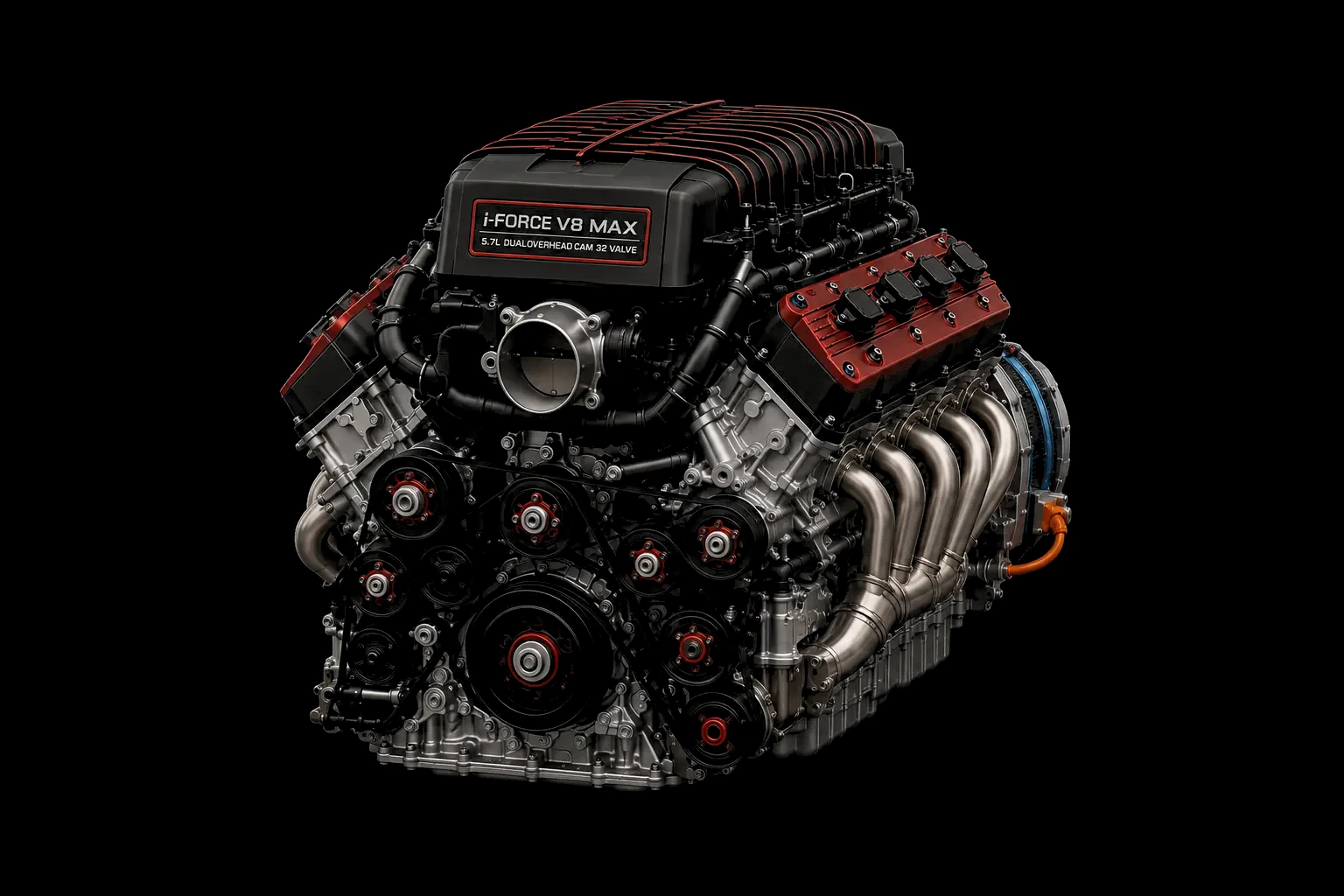
i-FORCE V8 MAX

Open it up.

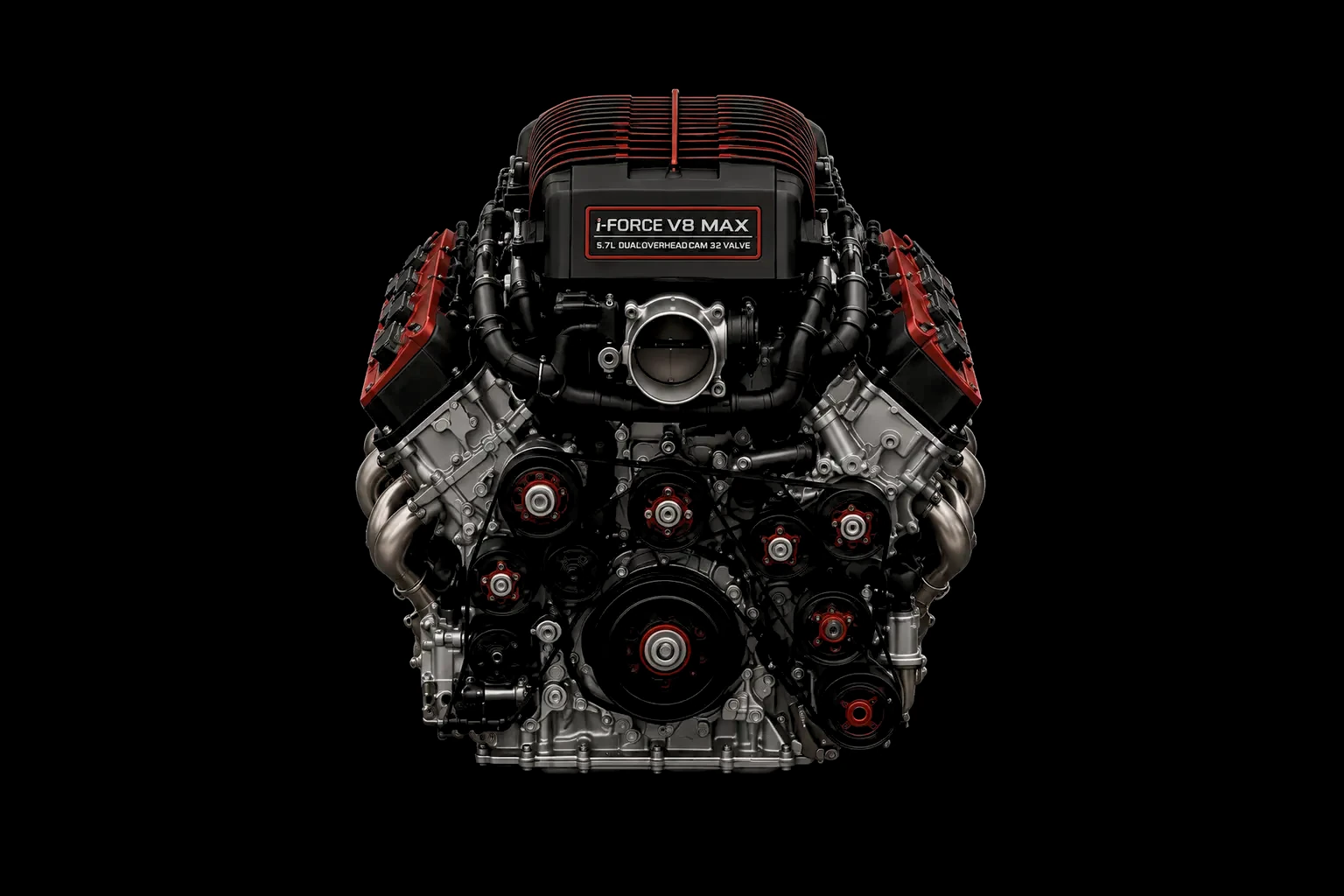
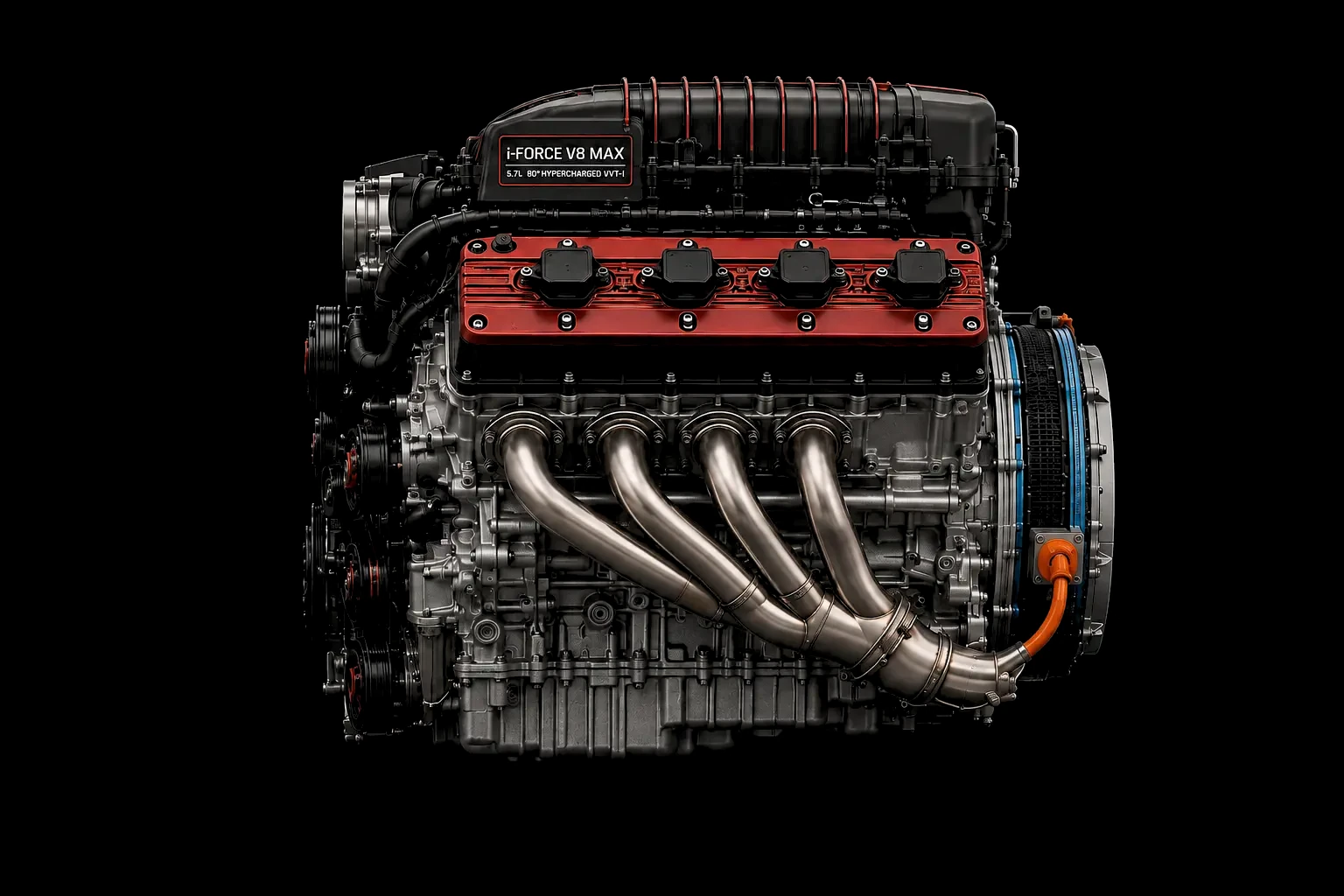
The i-FORCE V8 MAX engine seen head on: supercharger plenum, throttle body, quad overhead cam covers and long-tube exhaust headers.
01 Twin-vortex supercharger 2.65 liters per revolution
02 Quad overhead cam 32 valves, dual VVT-i
03 Electronic throttle body Drive-by-wire, 90 mm
04 Long-tube headers Equal length, stainless
05 Hybrid motor coupling Between block and ten-speed

Every side of it

Twelve steps around.

i-FORCE V8 MAX engine, front elevation, showing the supercharger plenum.
000°

The blower

Twin-vortex rotors move 2.65 liters of air every revolution. It never waits for revs.

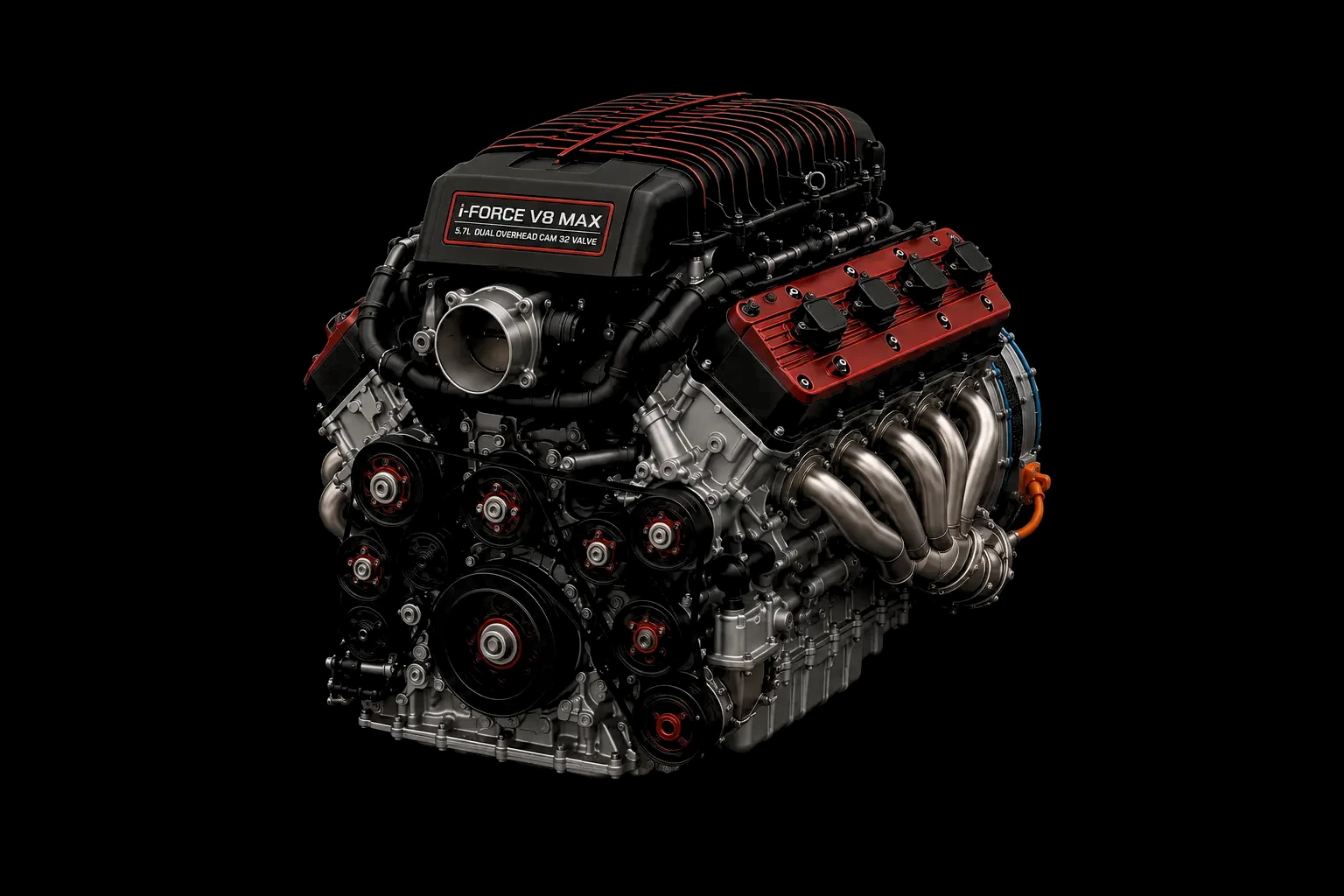
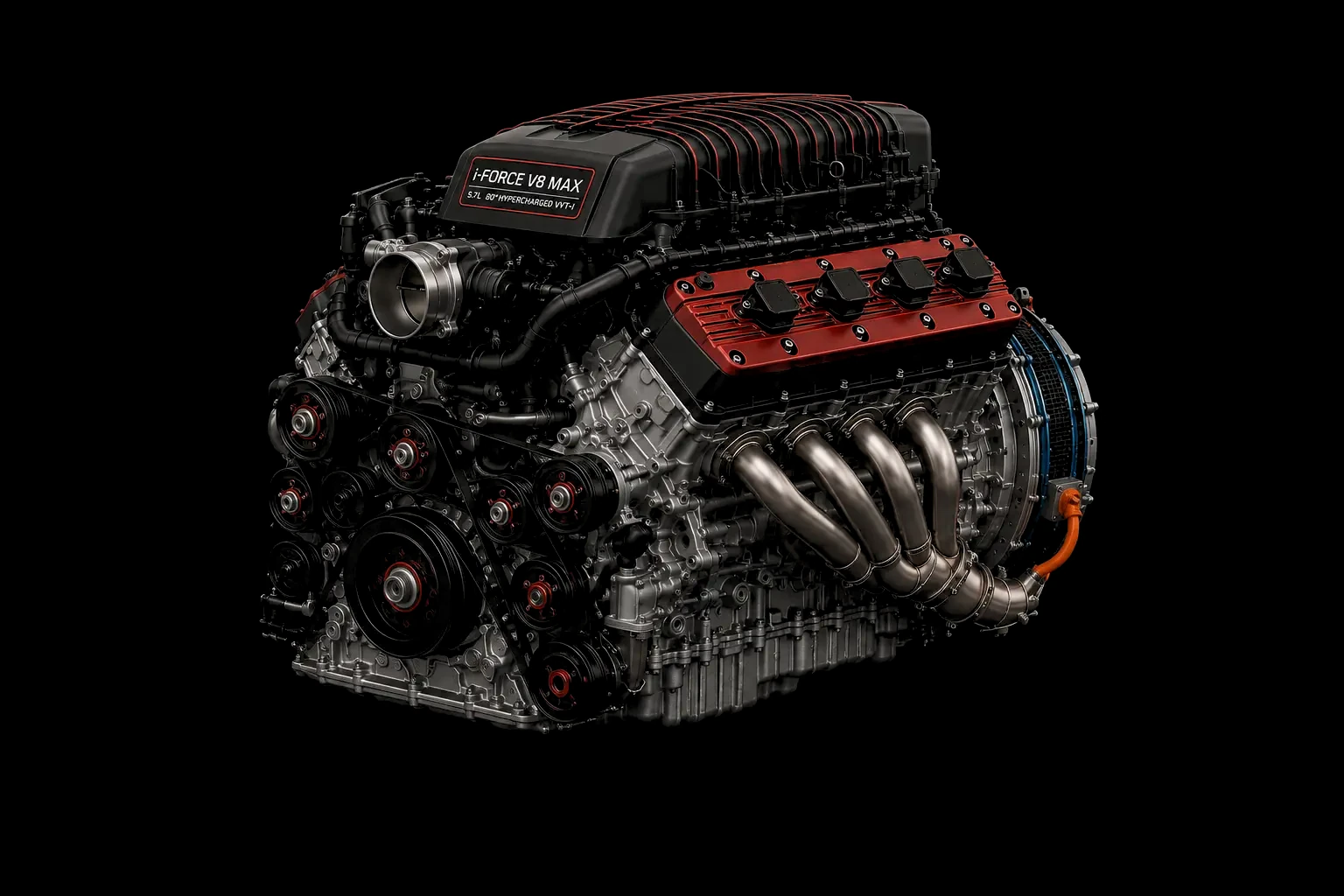
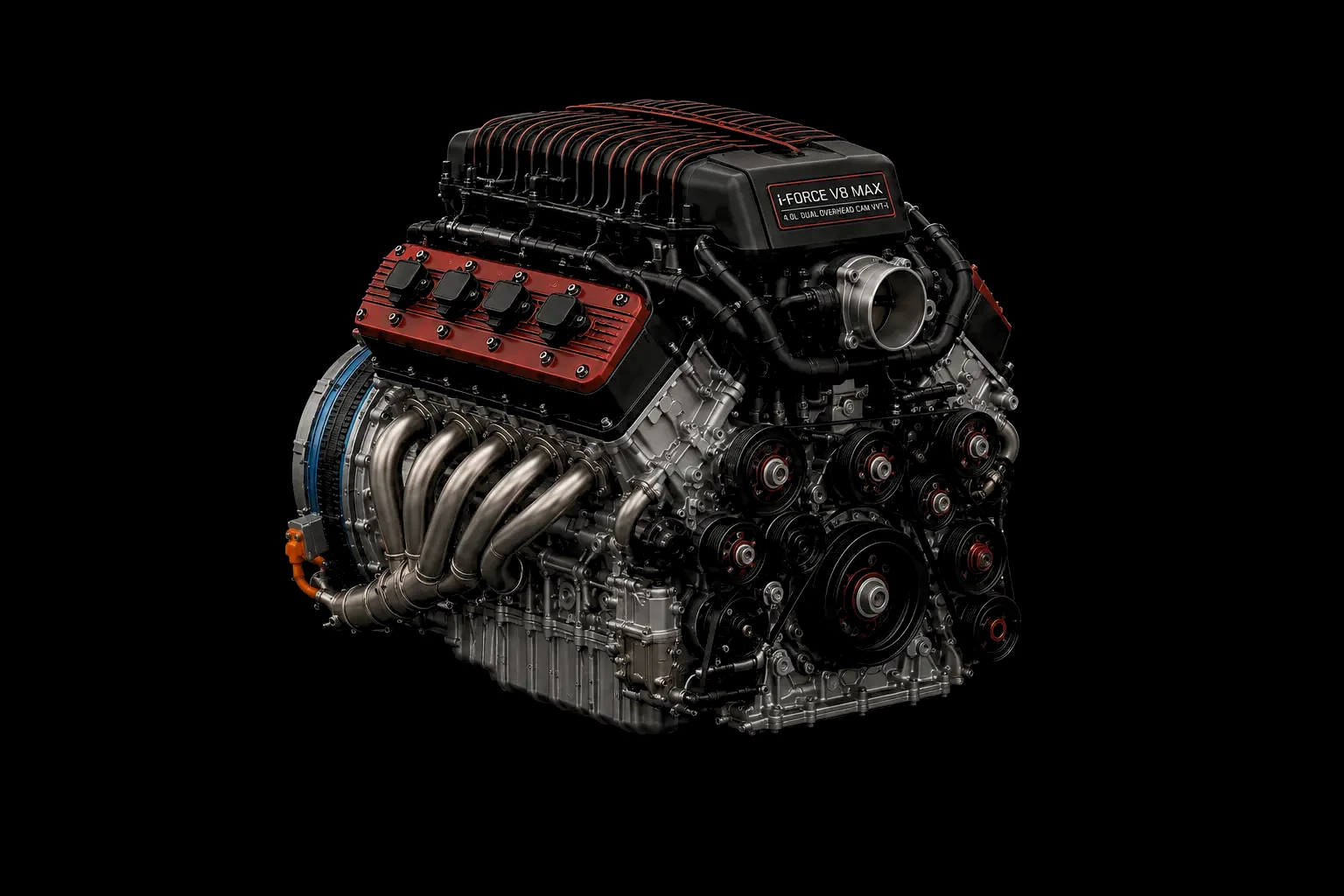
i-FORCE V8 MAX engine, front three-quarter, showing the charge cooler stack.
030°

Charge cooling

Air-to-water cooling sits under the plenum and kills 61 degrees before the intake valve ever sees it.

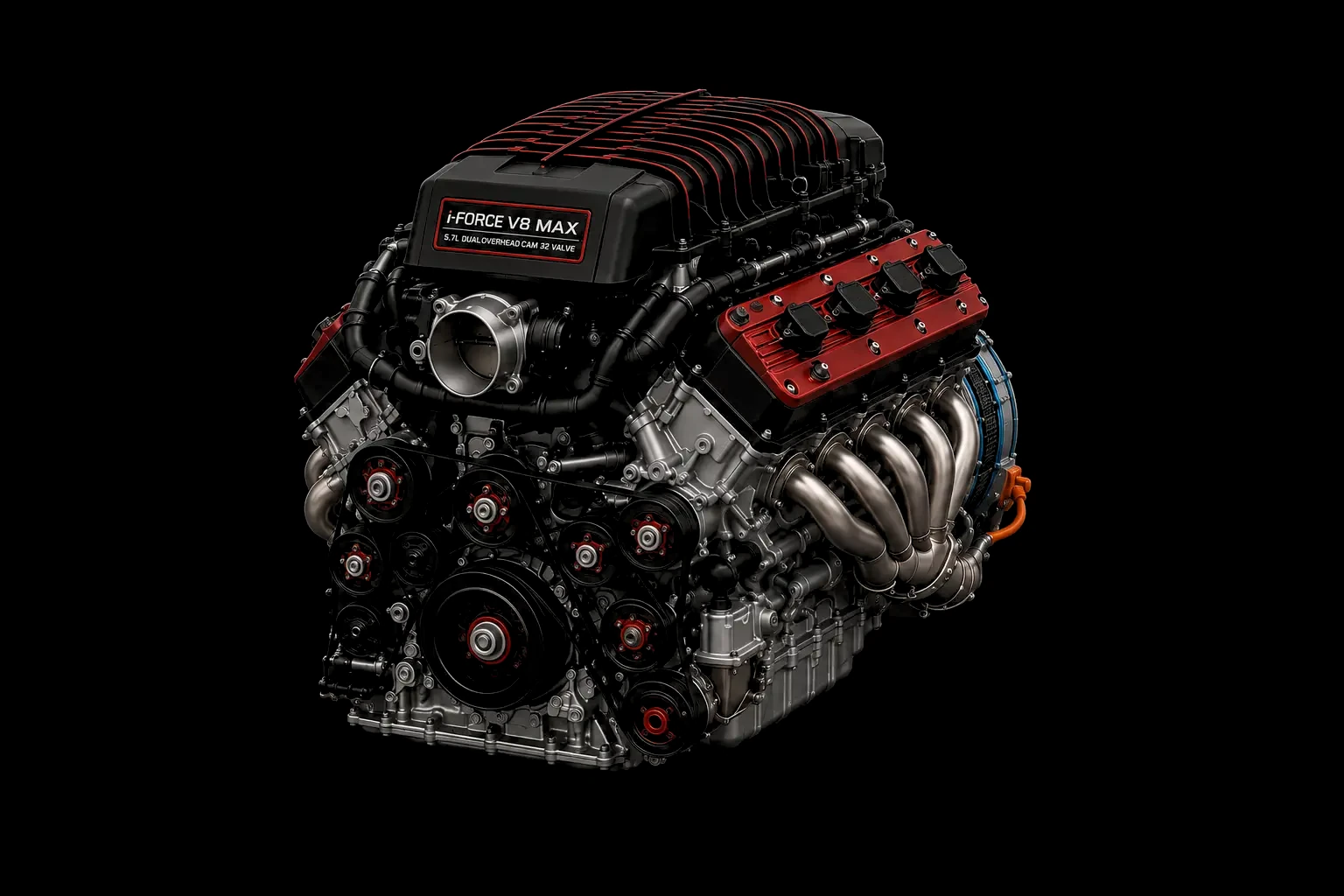
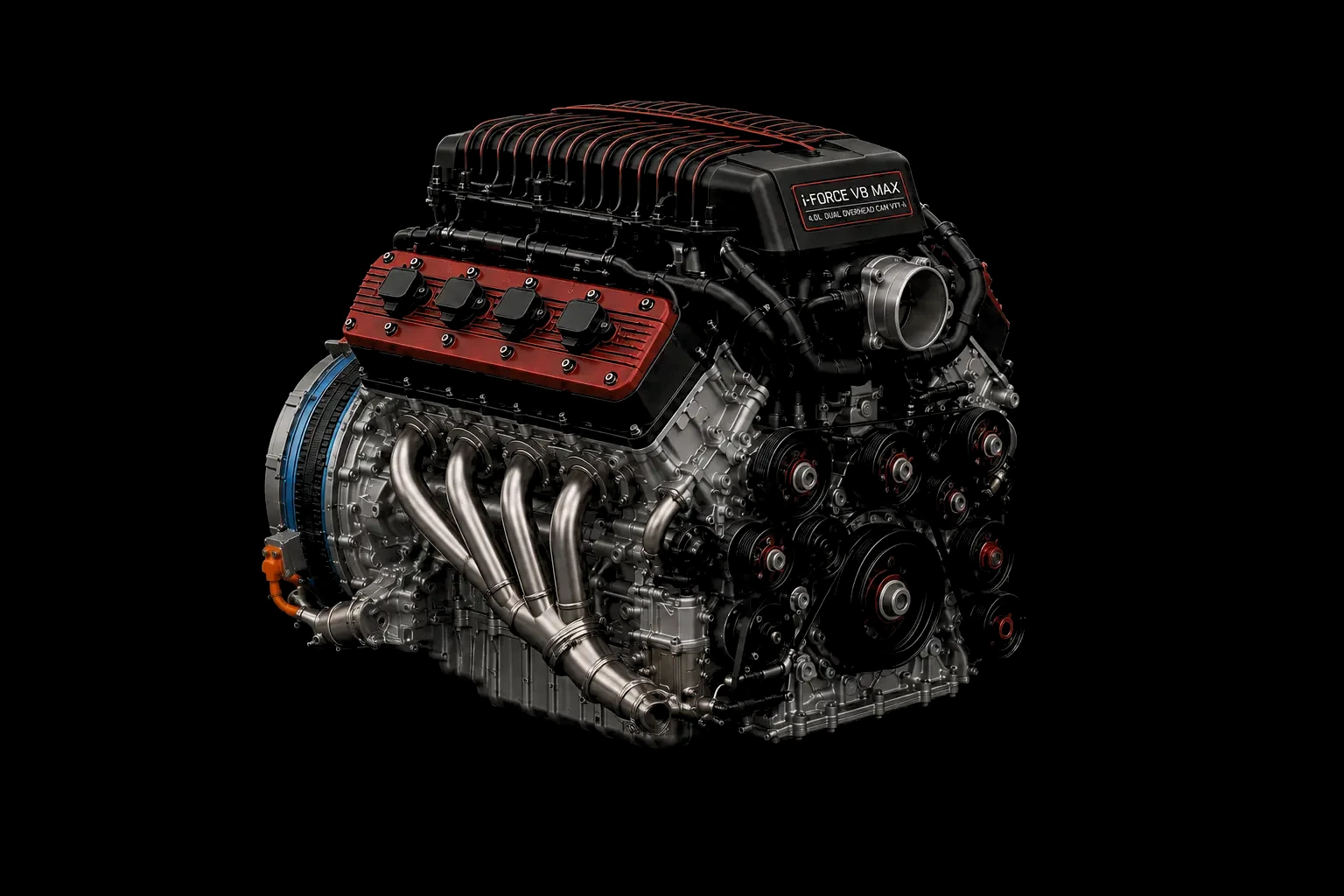
i-FORCE V8 MAX engine, front oblique, showing the throttle body.
060°

Ninety millimeters

A drive-by-wire throttle mapped to open faster than your ankle can move.

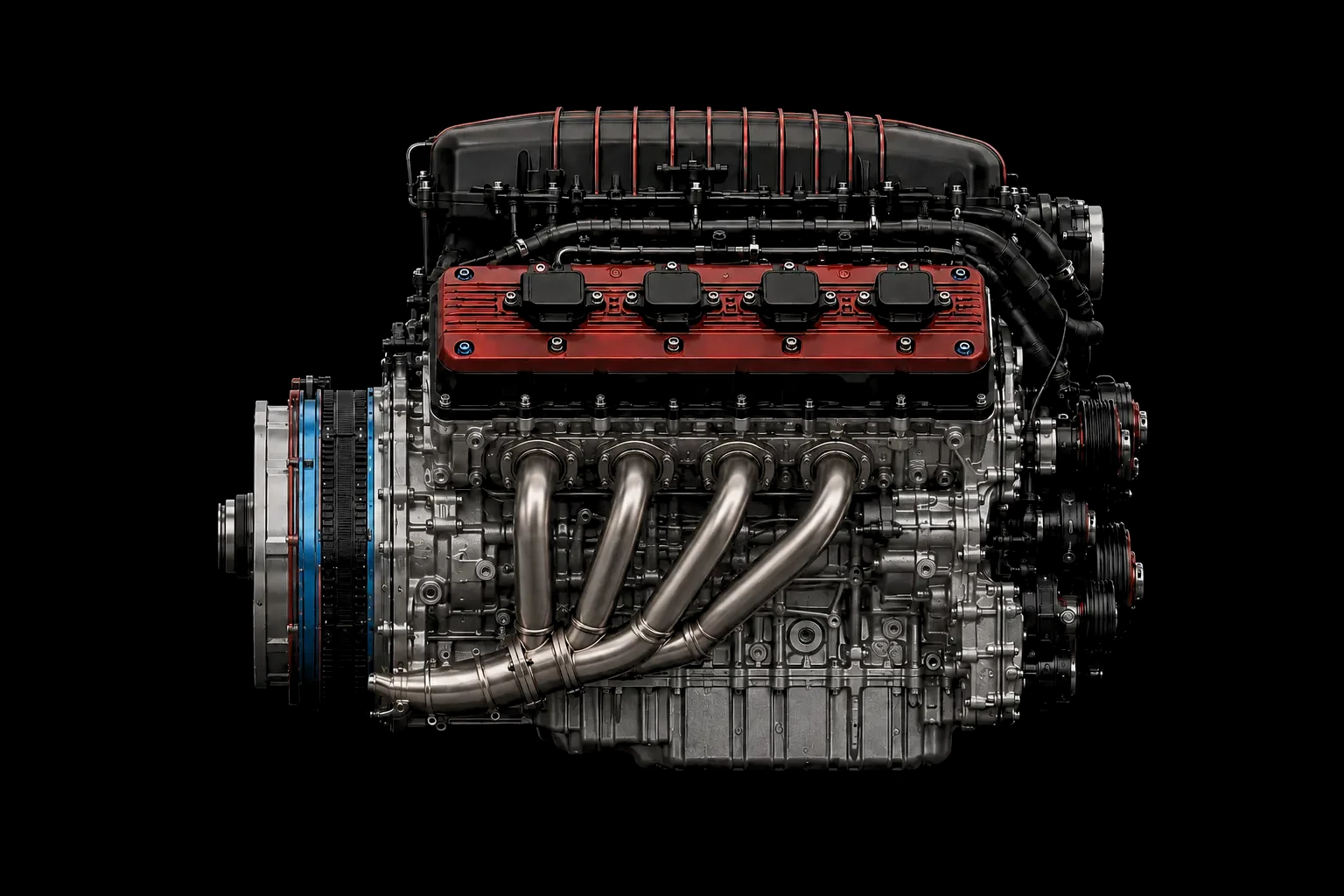
i-FORCE V8 MAX engine, full profile showing headers and hybrid cabling.
090°

The header run

Equal-length stainless primaries. The scavenging is the part you hear three blocks away.

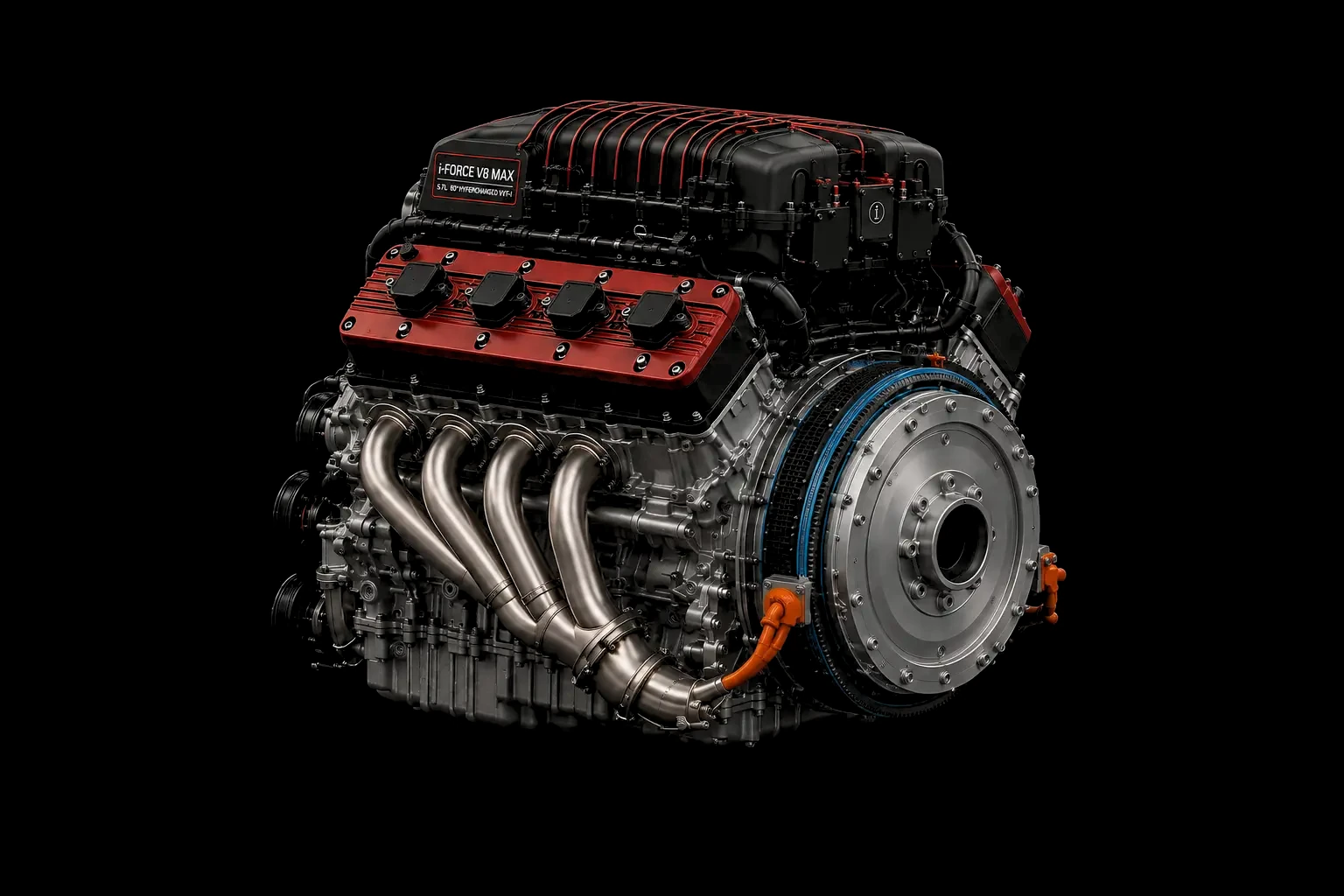
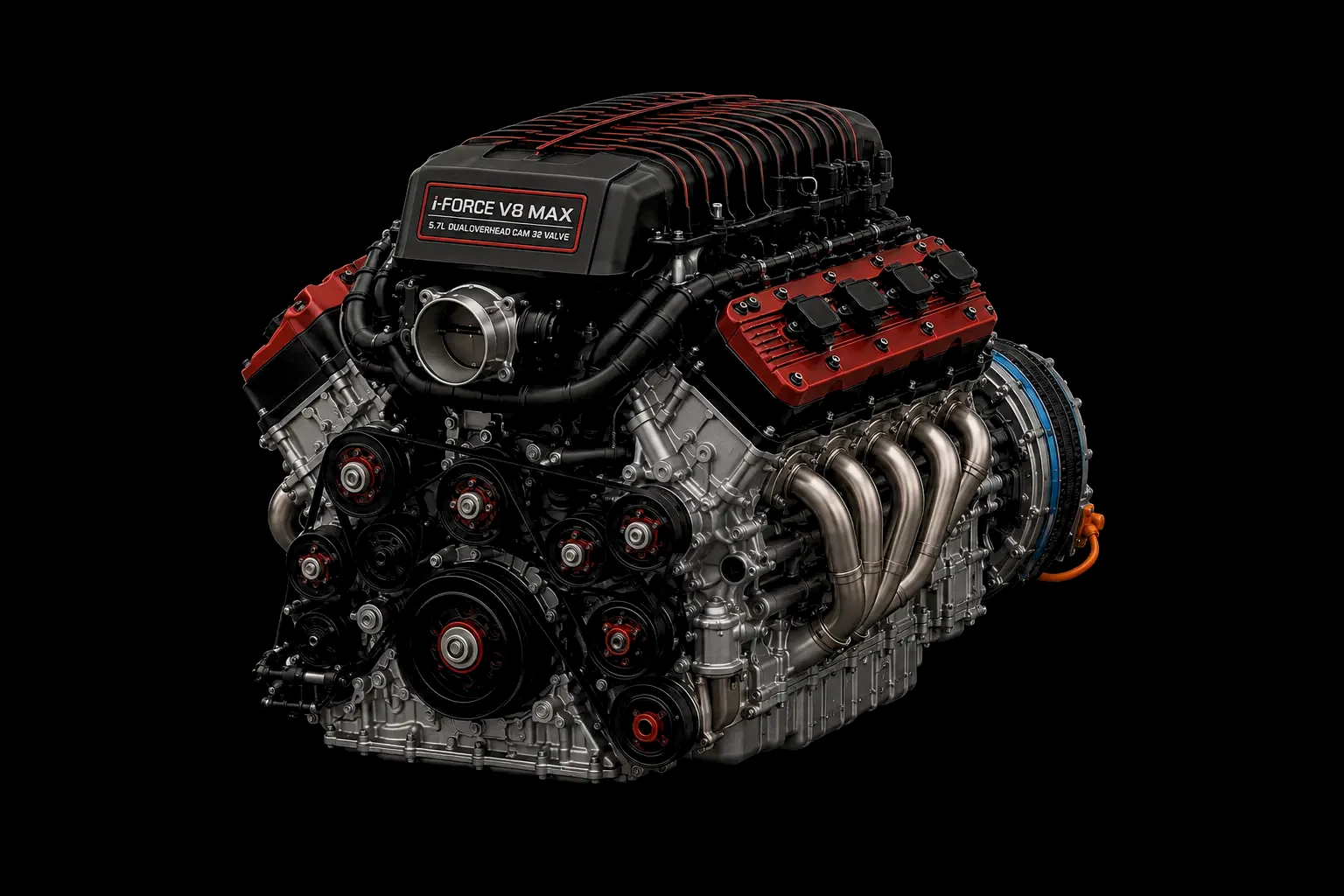
i-FORCE V8 MAX engine, rear oblique, showing the cam covers.
120°

Under the covers

Thirty-two valves, dual VVT-i, and a cam profile that keeps pulling well past six thousand.

i-FORCE V8 MAX engine, rear three-quarter, showing the hybrid motor coupling.
150°

The coupling

The hybrid motor lives between the block and the ten-speed, filling every gap the blower leaves.

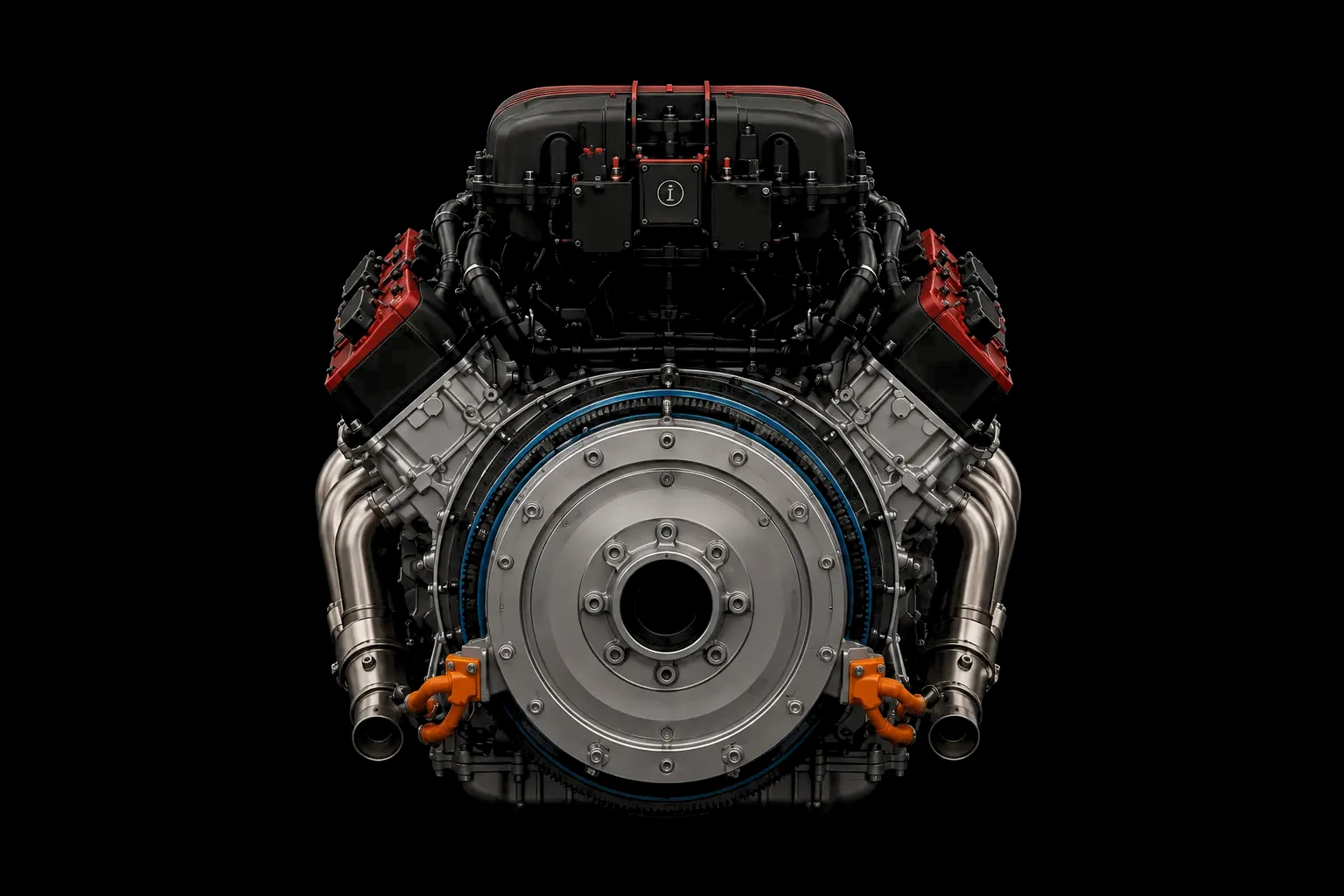
i-FORCE V8 MAX engine, rear elevation, showing the bellhousing face.
180°

The bellhousing

Where 806 lb-ft stops being an argument and becomes the transmission's problem.

i-FORCE V8 MAX engine, rear three-quarter from the opposite side, showing the oil system.
210°

Oil control

Five scavenge stages. Pressure holds through a full-throttle landing, not just a dyno pull.

i-FORCE V8 MAX engine, rear oblique from the opposite side, showing the block and sump.
240°

The bottom end

Forged crank, forged rods, 9.0:1 pistons. Built for boost, not for a brochure.

i-FORCE V8 MAX engine, full profile from the opposite side, showing the injection hardware.
270°

Dual injection

Direct and port running together — power when you want it loud, manners when you don't.

i-FORCE V8 MAX engine, front oblique from the opposite side, showing the coil packs.
300°

Eight coils

One per cylinder, timing trimmed individually so full boost never turns into detonation.

i-FORCE V8 MAX engine, front three-quarter from the opposite side, closing the turn.
330°

Iron and intent

The same 5.7 block they retired in 2021. Nobody asked it to come back quietly.

Design details

Read it up close.

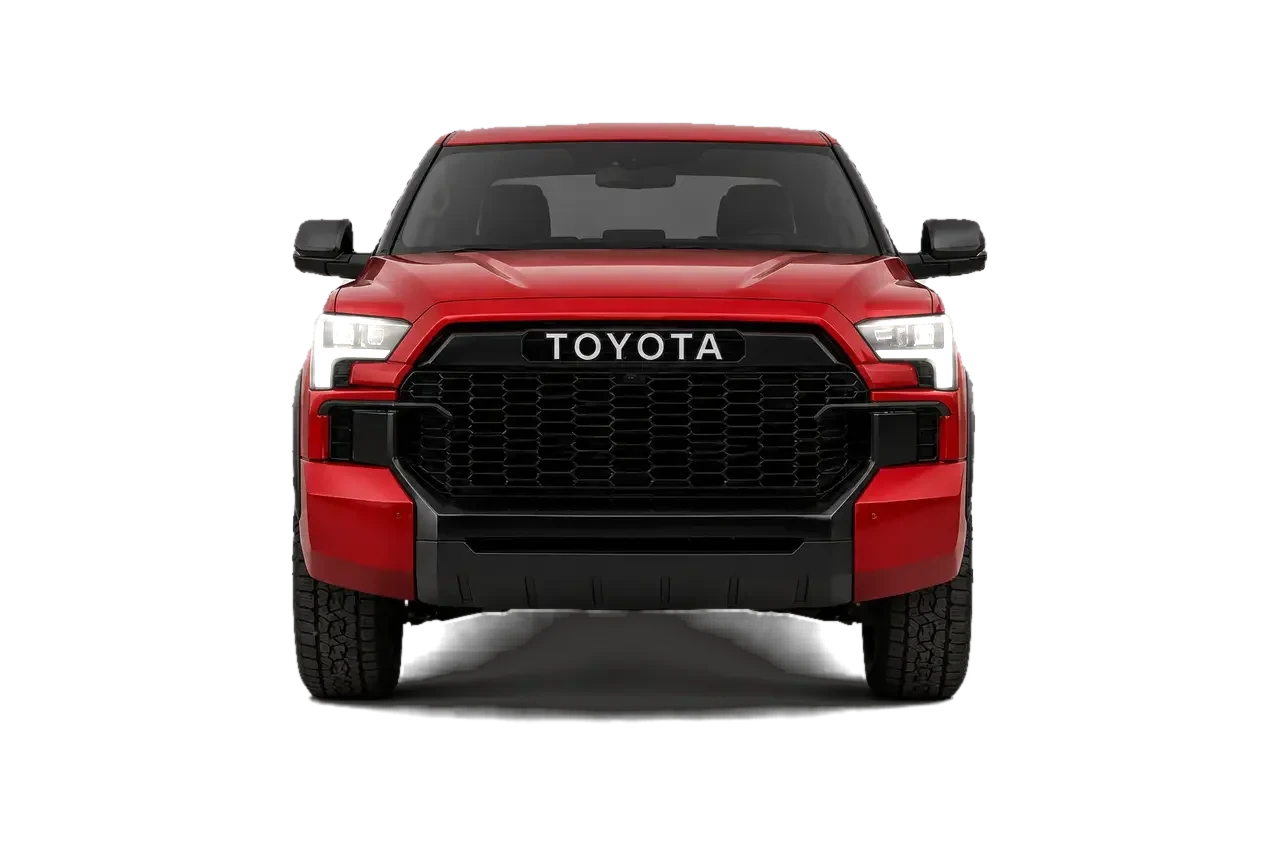
Head-on view of the Tundra HAMMER with its headlights lit, showing the blacked-out grille, wide front track and TOYOTA lettering.
01 Widened front track
Close view of the Tundra HAMMER front wheel, 37-inch all-terrain tire and high-clearance arch.
02 37-inch stance
Close view of the Tundra HAMMER tailgate with embossed TUNDRA lettering and rear recovery points.
03 Full-size bed
Rear three-quarter view of the Tundra HAMMER showing bed, tail lamps and rear suspension travel.
04 Desert-tuned rear

Concept targets

Every number,
on one page.

No brochure adjectives. What the concept is specified to do, in the units it would be measured in.

Powertrain

Engine
5.7 L V8
Induction
Twin-vortex
Displaced per rev
2.65 L
Power
768 hp
Torque
806 lb-ft
Charge cooling
−61 °F
Transmission
10-speed
Hybrid motor
Inline

Suspension

Front travel
14.2 in
Rear travel
15.4 in
Dampers
Bypass
Reservoirs
Remote
Bump stops
Hydraulic
Front bar
Disconnects
Lockers
Front + rear
Drive modes
6

Stance

Tires
37 × 12.50 R17
Wheels
Forged 17 in
Ground clearance
13.4 in
Added track
+3.0 in
Approach
33.1°
Breakover
24.6°
Departure
26.4°
Wheelbase
145.7 in

Capability

0–60 mph
3.9 s
Curb weight
6,340 lb
Payload
1,540 lb
Tow rating
10,800 lb
Fording
33.5 in
Skid plates
Full length
Recovery points
4
Rated to
12,000 lb

Figures are invented for the concept — see the note at the foot of this page.

The hardware

Over-built,
end to end.

  1. 01

    i-FORCE V8 MAX

    The 5.7 returns with a roots-type supercharger and a hybrid motor sandwiched between the block and the ten-speed. 768 hp and 806 lb-ft, with the electric side filling in torque below 2,000 rpm so there is no hole to wait through.

  2. 02

    Desert-tuned damping

    Internal-bypass dampers with remote reservoirs and position-sensitive valving — soft in the middle of the stroke, progressively firmer at the ends. Hydraulic bump stops at all four corners. 14.2 inches of front travel, 15.4 inches at the rear.

  3. 03

    37s on beadlock-capable forged wheels

    37-inch all-terrains on 17-inch forged aluminum, beadlock-capable so you can air down to single digits and keep the bead. 13.4 inches of ground clearance under the low point.

  4. 04

    Locked at both ends

    Electronic locking differentials front and rear, plus a front stabilizer bar that disconnects at the touch of a button for full articulation. Three inches of extra track width and high-clearance composite fenders to clear the tires at full stuff.

  5. 05

    Baja mode, and the telemetry to use it

    Six drive modes including a Baja setting that holds gears, sharpens throttle and firms the dampers for high-speed sand. A multi-terrain camera array sees under the front bumper, and the cluster reads out live damper position, articulation and driveline temperatures.

  6. 06

    Built to take the landing

    Boxed and gusseted frame, full-length aluminum skid plates, dedicated engine-oil and transmission coolers, and recovery points rated to pull the truck out by its own weight. Everything you would add after you bought it, already done.

Configure

Build yours.

Red 2028 Tundra HAMMER pickup truck, front three-quarter view, in a black studio.

Finish

Package

Output
768 hp / 806 lb-ft
Rear travel
15.4 in
Tires
37 × 12.50 R17
As configured
$89,400

Replay the 360°

Build code HMR-SR-STD-28

Colophon

How it was made.

Ten studio renders and a text editor. No framework, no build step, no animation library, and nothing fetched from anyone else's server. Not one audio file either — the interface sounds you can switch on in the header are synthesised in the browser from a handful of oscillators.

Source renders
10
Runtime dependencies
0
Build step
None
Third-party requests
0
Audio files
0
Largest paint
—
Transferred
—
Requests
—

The last three are measured in your browser, on this page load. Anything already cached transferred nothing, so a second visit reads lighter.

If you want something built to this standard, that is what we do.

Start a project

2028 Tundra HAMMER

Take it back.

Seven hundred and sixty-eight horsepower, thirty-seven inches of tire, and the engine they told you that you could not have again.

About the 2028 Tundra HAMMER concept

The Tundra HAMMER is a concept for a full-size, high-speed off-road pickup — a desert super truck aimed squarely at the Ford F-150 Raptor R and the Ram 1500 TRX. Its headline is the return of the 5.7-liter V8, retired after the 2021 model year to meet fuel-economy rules and mourned by Tundra owners ever since. Here it comes back supercharged and hybrid-assisted, rated at 768 horsepower and 806 lb-ft.

Underneath, the concept specifies the hardware that separates a desert truck from a trim package: internal-bypass dampers with remote reservoirs and position-sensitive valving, hydraulic bump stops, 14.2 inches of front and 15.4 inches of rear wheel travel, 37-inch all-terrain tires on beadlock-capable forged wheels, 13.4 inches of ground clearance, electronic locking differentials front and rear, a disconnecting front stabilizer bar, three inches of added track width, a Baja drive mode, full-length skid plates and dedicated driveline coolers.

The centerpiece of this page is a scroll-controlled reveal: ten studio angles around the truck, cross-dissolved and driven directly by your scroll position so you can stop, reverse and hold on any one of them. If you prefer reduced motion, the reveal is replaced by a single static three-quarter view and all of the written content stays exactly where it is.